Rügen Island, Prora & Stralsund Private Tour
"Matti is very well informed, excellent at keeping kids engaged in the tours, and just generally nice to be around. We would highly recommend him if you're looking for a private tour guide in Berlin."

Germany's Baltic coast offers a remarkable combination of history, architecture and natural beauty. On this private day trip from Berlin, we leave the capital behind and travel north to discover the UNESCO-listed Hanseatic city of Stralsund, the vast Nazi-era resort complex of Prora, the famous chalk coast of Rügen and the elegant seaside resort of Sellin. Along the way, centuries of German history unfold against some of the country's most spectacular coastal scenery.
Whether your interests lie in military history, architecture, photography or simply exploring places few international visitors reach, this excursion offers a unique perspective on northern Germany.
All tours are private and can be tailored to your interests. Rates depend on transportation and tour length, with better rates available for longer tours. If you would like a personalised proposal, simply get in touch and I will be happy to design the perfect Baltic Coast adventure for you.
Tour Option #1: Prora, Rügen & UNESCO Stralsund Day Tour
Explore Germany's largest island through Hanseatic history, breathtaking landscapes and the legacies of the Third Reich and Cold War







We begin with an early departure from Berlin and travel north through the landscapes of Brandenburg and Mecklenburg-Vorpommern. Depending on traffic and pickup location, the drive to Stralsund takes approximately three hours. During the journey I provide historical background on Prussia, the Hanseatic League, Germany's Baltic coast and the dramatic events that shaped the region during the twentieth century.
Our first major stop is Stralsund, one of the finest Hanseatic cities in northern Europe and a UNESCO World Heritage Site. Its skyline of Brick Gothic churches and merchant houses reflects centuries of prosperity as part of the Hanseatic trading network. We explore the market square, admire the magnificent Town Hall, visit St. Nicholas Church and stroll through the picturesque old town. The harbour area also offers excellent views across the Strelasund towards the island of Rügen.
Crossing the impressive Rügen Bridge, we enter Germany's largest island. Our next destination is Prora, one of the most extraordinary surviving architectural projects of the Third Reich. Originally conceived as a vast holiday resort capable of accommodating 20,000 visitors, the project was never completed as intended. During our visit we examine the ambitions behind the scheme, discuss Nazi social policy and propaganda, and explore how the site later became a military facility under East Germany. Few places illustrate the dramatic political changes of twentieth-century Germany as vividly as Prora.
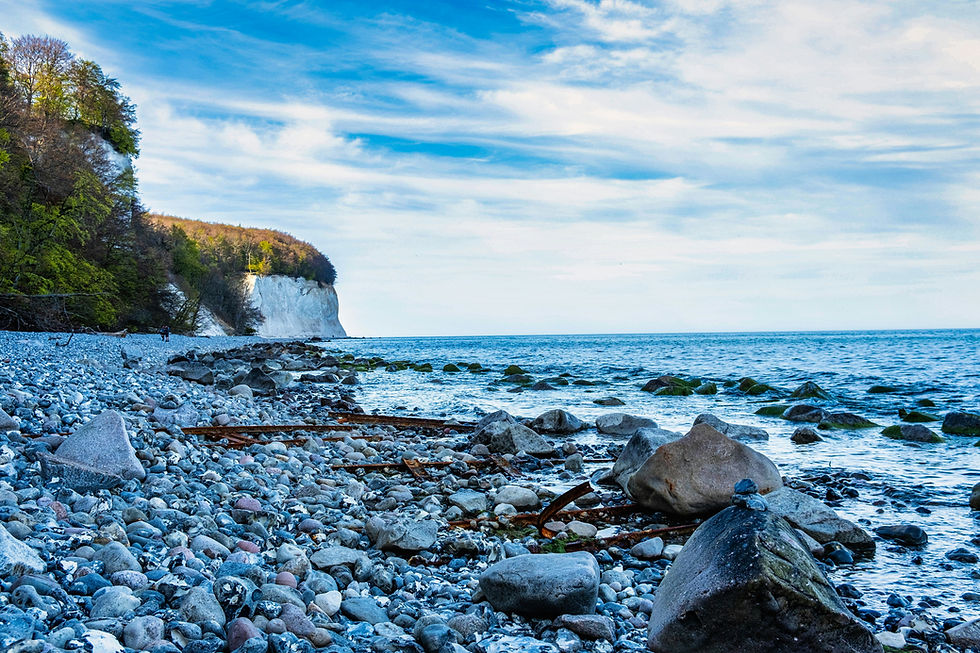
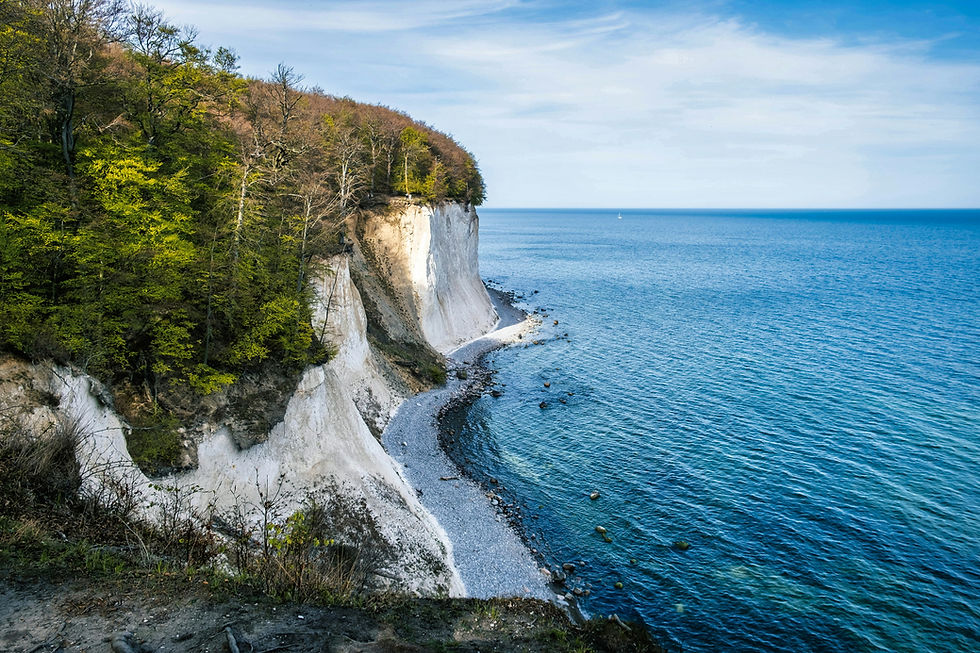
From Prora we continue through the forests of Jasmund National Park towards one of the viewpoints overlooking Rügen's famous chalk coast. A short walk leads us to breathtaking views of white cliffs rising above the Baltic Sea. The landscape inspired artists such as Caspar David Friedrich and remains one of Germany's most iconic natural landmarks. This stop provides a welcome contrast to the historical themes of the day and offers outstanding opportunities for photography.
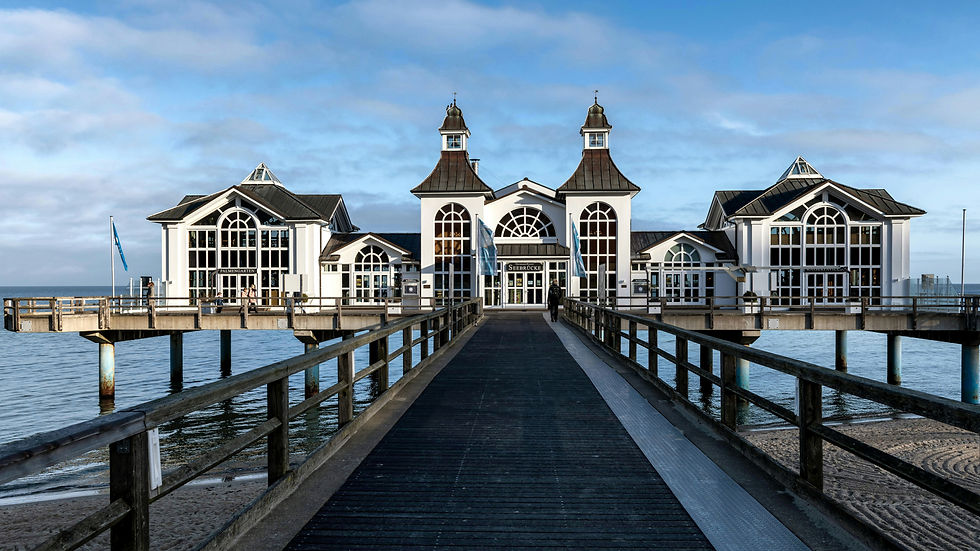
Our final major stop is Sellin, perhaps Rügen's most elegant seaside resort. Famous for its striking pier, historic spa architecture and relaxed atmosphere, Sellin captures the charm of the Baltic coast at its finest. Guests can enjoy a stroll along Wilhelmstraße, admire the beautifully restored villas and take in panoramic sea views from the famous Seebrücke.
After time to relax, photograph the coastline or enjoy refreshments, we begin the return journey to Berlin. The drive back typically takes around three hours. Depending on the season, traffic and individual preferences, the total duration of the excursion is usually between ten and twelve hours.
The tour can be conducted by private car, minivan or larger vehicle depending on group size. It can also be customised to focus more heavily on military history, architecture, photography or local culture.
Tour Option #2: Baltic Coast & Third Reich History Tour from Berlin
From medieval merchants to Nazi megaprojects and East German military history, experience the many layers of Germany's Baltic coast


For travellers with a strong interest in World War II, military history and the origins of the Space Age, the itinerary can be adjusted to include Peenemünde on the island of Usedom. This excursion transforms the tour into one of the most comprehensive explorations of twentieth-century history available from Berlin.
Instead of travelling directly from Prora to the chalk coast and Sellin, we continue east across Rügen and onto Usedom. The drive from Prora to Peenemünde takes approximately one hour. Here we visit the former Army Research Centre where the V-1 flying bomb and V-2 rocket were developed. The site played a central role in Nazi Germany's weapons programme and later influenced both the American and Soviet space programmes through the work of figures such as Wernher von Braun.
The Historical Technical Museum occupies the former power station of the research complex and presents the history of rocket development, wartime production, forced labour and the legacy of Peenemünde after 1945. Because of the extensive museum displays, most guests spend between ninety minutes and three hours exploring the exhibitions. Depending on individual interests, this visit may be self-guided after an introduction at the site.
Such a route would combine Stralsund, Prora and Peenemünde while placing particular emphasis on the Third Reich, forced labour, refugee movements across the Baltic Sea in 1945, the sinking of the Wilhelm Gustloff, East German military history and the strategic importance of the Baltic coast during the Cold War.
This version is particularly suitable for visitors who have already seen many of Germany's traditional tourist highlights and wish to gain a deeper understanding of the region's role in some of the defining events of modern European history.
Frequently Asked Questions
How long is the drive from Berlin to Rügen?
The drive from Berlin to Stralsund takes approximately 3 hours. From there, it is another 30–60 minutes to most locations on Rügen, depending on the route and stops. As this is a long-distance excursion, the total tour duration is typically between 11 and 13 hours.
What is Prora?
Prora is one of the largest surviving architectural projects of the Third Reich. Built between 1936 and 1939 as a planned seaside resort for 20,000 vacationers, the massive complex stretches for several kilometres along the Baltic coast. The resort was never completed as intended due to the outbreak of World War II. After the war, Prora became one of the largest military sites in East Germany and remained a restricted military area throughout much of the Cold War.
Is there World War II history on Rügen and Usedom?
Absolutely. Prora is one of the most important surviving Nazi-era sites in Germany. Nearby Rügen also witnessed refugee evacuations and military activity during the final months of the war. On neighbouring Usedom, Peenemünde was the research and development centre for the V-1 flying bomb and V-2 rocket programme, making it one of the most significant WWII sites in Europe.
Is there Cold War history on Rügen?
Yes. Following the war, Prora was transformed into one of East Germany's largest military bases and remained a restricted military zone for decades. The island also played an important strategic role in the Baltic during the Cold War. Visitors interested in East German history often find the Cold War story of Prora just as fascinating as its Nazi origins.
Do we visit a museum in Prora?
Usually, no. The focus of the tour is understanding the scale, architecture and history of the site itself. Depending on opening hours and guest interest, museum visits can sometimes be arranged, but most visitors find the outdoor exploration and historical explanation sufficient.
Do we go inside the Peenemünde Museum?
If Peenemünde is added to the itinerary, guests are welcome to visit the museum. However, I do not guide inside the museum itself. Instead, I provide historical context before arrival and then allow guests to explore the exhibitions independently at their own pace. Most visitors spend between 1.5 and 3 hours there.
Why is Stralsund a UNESCO World Heritage Site?
Stralsund is one of the best-preserved Hanseatic cities in northern Europe. Together with nearby Wismar, it was designated a UNESCO World Heritage Site for its outstanding collection of Brick Gothic architecture, medieval street plan and importance within the Hanseatic trading network.
Can this tour be done by public transport?
Technically yes, but I would not recommend it. Reaching Stralsund, Prora, the chalk coast, Sellin and potentially Peenemünde by public transport in a single day would involve multiple train and bus connections and significantly reduce the time available at each destination. This itinerary works best as a private tour by car.
How much does the tour cost?
My guiding fee is typically €60–€120 per hour, depending on group size and transportation. Rates can be lower with public transport, and for longer day trips I may not charge for time spent driving, independently visiting museums, during lunch, or other breaks. Reductions are possible for longer itineraries, so please contact me for a personalized quote.
Can cruise ship passengers from Warnemünde book this tour?
Possibly, but the tour is primarily designed as a day trip from and back to Berlin. Cruise guests docking in Warnemünde are welcome to enquire, but additional travel time and costs would apply for my journey to and from the port. If you are arriving by cruise ship, I also offer dedicated shore excursions and Berlin tours specifically designed for cruise passengers.
Can the itinerary be customised?
Absolutely. Depending on your interests, the tour can focus more heavily on World War II history, Cold War history, architecture, photography, seaside resorts or natural landscapes. Additional stops such as Peenemünde can also be added to create a more in-depth historical experience.