The Craziest Escapes Across the Berlin Wall and the Iron Curtain
The Berlin Wall was designed to be escape-proof. Guard towers, attack dogs, floodlights, anti-vehicle trenches, automatic alarms, and heavily armed border guards turned the border between East and West into one of the most fortified frontiers on Earth.
Yet between 1961 and 1989, thousands of East Germans still found ways to reach freedom. Some dug tunnels. Others hid inside cars, flew homemade aircraft, or even swam across the Baltic Sea. A few escapes were so audacious that they seem more like Hollywood movie plots than real historical events.
If you're fascinated by Cold War history, you can also join me on a private Cold War tour in Berlin, where we visit original Berlin Wall sites, former border crossings, escape locations, and hidden remnants of the Iron Curtain that most visitors never see.
Here are some of the most incredible Berlin Wall escapes ever attempted.
1. The Senior Citizens' Tunnel: Walking to Freedom in Style
Date: May 1962
When people imagine Berlin Wall escapees, they usually picture young men sprinting across the border. But one of the most remarkable tunnel escapes involved a group of senior citizens.
Twelve older East Germans spent more than two weeks digging a 32-meter tunnel beneath the border. The entrance was cleverly hidden beneath a chicken coop. Unlike most escape tunnels, this one was unusually tall—around 1.75 meters high.
The reason? The escapees didn't want to crawl.
After painstakingly enlarging the tunnel, they were able to walk upright into West Berlin alongside their spouses. As one participant later explained:
"We wanted to walk to freedom comfortably and unbowed."
It remains one of the most unique Berlin Wall tunnel escapes ever recorded.
2. The Bulletproof Bulldozer Breakout
Date: September 11, 1966
East German border troops used heavily armored bulldozers to maintain the border defenses. The machines weighed around 12 tons and featured bulletproof plating.
One day, two couples and a three-year-old child decided to steal one.
The escapees commandeered the bulldozer and drove directly toward the border. The machine smashed through multiple fences while border guards fired more than 60 shots at it.
The bullets barely penetrated the armored vehicle.
Eventually, the bulldozer crashed into a tree on the western side of the border near Spandau. The escapees climbed out bruised but alive and had successfully bulldozed their way into freedom.
Few Berlin Wall escapes were quite so literal.
3. The Trojan Cow
Date: Exposed July 1969
The ancient Greeks had their Trojan Horse. Cold War Berlin had its Trojan Cow.
Escape helpers acquired a life-sized hollow bull and placed it inside a transport van. East Germans willing to pay for an escape would climb inside the animal's belly before the van crossed through border checkpoints.
When suspicious guards inspected the vehicle, the drivers simply explained that they were transporting an exhibition piece.
Remarkably, the trick worked multiple times.
Border guards never suspected that the seemingly harmless cow contained human cargo. The operation only ended when someone betrayed the scheme to the authorities.
It remains one of the strangest Cold War escape methods ever documented.

4. Escaping From the Heart of Communist Power
Date: July 28, 1965
Perhaps the boldest Berlin Wall escape ever began inside one of East Germany's most important government buildings.
Engineer Heinz Holzapfel had been summoned to the House of Ministries—the massive former Nazi Air Ministry building that later housed senior East German officials.
Rather than attend a routine meeting, he brought his wife and son and hid them inside a restroom marked "Out of Order."
After nightfall, the family climbed onto the roof.
Using a hammer attached to a rope, Holzapfel threw a line across the Berlin Wall to escape helpers waiting in West Berlin. They connected it to a steel cable, creating an improvised zipline.
One by one, his son, wife, and finally Holzapfel himself slid over the border and into freedom.
The most astonishing part?
Soviet officers reportedly witnessed the entire operation but assumed it was a secret East German intelligence mission and never intervened.
5. The Convertible That Drove Under the Border Barrier
Date: May 5, 1963
Love inspired one of the most ingenious Berlin Wall escapes.
Austrian citizen Heinz Meixner wanted to marry his East Berlin girlfriend, Margarete Thurau. East German authorities refused permission for her to leave.
So Meixner modified a convertible.
He removed the windshield, lowered the suspension by reducing tire pressure, and calculated that the vehicle would be just low enough to fit beneath the border barrier.
When he reached Checkpoint Charlie, his fiancée and future mother-in-law were lying flat inside the car.
At the last moment, Meixner ducked and accelerated.
The car shot underneath the barrier before guards could react. By the time shots were fired, the trio had already reached West Berlin.
The embarrassed authorities quickly redesigned the border barriers afterward.
6. Tunnel 57: The Most Famous Escape Tunnel
Date: October 1964
Tunnels became one of the most effective methods of escaping East Berlin.
The most famous of them all was Tunnel 57, named after the 57 people who successfully escaped through it. The tunnel stretched 145 meters and reached a depth of 12 meters beneath the city. More than 30 helpers worked for months digging the passage.
The operation nearly succeeded in helping over 100 people escape. However, Stasi informants discovered the tunnel and alerted authorities.
Even so, 57 men, women, and children made it safely into West Berlin before the route was shut down.
Today, Tunnel 57 remains one of the greatest engineering feats of Berlin Wall history.

7. The Family Hot Air Balloon Escape
Date: September 16, 1979
One of the most famous Iron Curtain escapes did not happen in Berlin at all.
Aircraft mechanic Hans-Peter Strelzyk and his friend Günter Wetzel dreamed of flying over the border.
After watching a television documentary about ballooning, they spent months secretly building a giant hot air balloon from bedsheets and scraps of fabric. Their wives stitched together dozens of pieces of cloth while the men constructed the burner system.
Their first attempt failed.
Their second attempt succeeded spectacularly.
Two families, four adults, and four children floated over the heavily guarded border and landed safely in West Germany after a flight lasting roughly half an hour.
Their story later inspired books, documentaries, and the acclaimed film Balloon.
8. The Doctor Who Swam 45 Kilometers Through the Baltic Sea
Date: July 1971
If escaping over the Wall seemed impossible, escaping through the Baltic Sea was arguably even harder.
Doctor Peter Döbler spent months training for a swim that many considered suicidal.
He studied currents, weather patterns, patrol schedules, and searchlight positions. Then he equipped himself with a wetsuit, compass, flippers, emergency supplies, and his medical certificates sealed in waterproof packaging.
One summer evening he entered the sea near Kühlungsborn.
For almost an entire day he swam through cold, dangerous waters while East German search teams hunted for him.
After covering approximately 45 kilometers, he reached safety near Fehmarn.
It remains one of the longest and most extraordinary swimming escapes from East Germany.
9. The Bethke Brothers and the Ultralight Aircraft Rescue
Date: May 1989
Just months before the Berlin Wall fell, the Bethke brothers staged one of the most cinematic escapes of the entire Cold War.
Two brothers living in West Berlin wanted to rescue their brother, who remained trapped in East Berlin.
Their solution?
Learn how to fly.
After purchasing two ultralight aircraft, they painted red Soviet stars on the wings to resemble military aircraft. Under cover of darkness, they flew into East Berlin, landed in Treptower Park, picked up their brother, and flew back out.
Minutes later, all three brothers landed safely near the Reichstag in West Berlin.
It was one of the final great escape stories of the Berlin Wall era.
10. The Hijacked Airliner That Landed in Freedom
Date: August 30, 1978
One of the most dramatic escapes of the Cold War began when two East Berlin waiters, Hans Detlef Alexander Tiede and Ingrid Ruske, travelled to Poland hoping to flee using forged documents. When their contact was arrested by the Stasi and failed to appear, they realized returning to East Germany could mean prison.
Desperate, they improvised an astonishing new plan.
After buying a toy starter pistol at a flea market, they boarded LOT Polish Airlines Flight LO 165 from Gdańsk to East Berlin. As the aircraft approached Schönefeld Airport, Tiede took a flight attendant hostage and demanded that the pilot divert to West Berlin's Tempelhof Airport instead.
The pilot complied.
Moments later, the Tupolev Tu-134 touched down safely in the American sector of Berlin. As US military personnel surrounded the aircraft, Tiede walked down the stairs with his hands raised and surrendered peacefully. Not a single passenger was injured.
Once the plane sat on the tarmac in West Berlin, several passengers seized the unexpected opportunity and requested asylum rather than returning behind the Iron Curtain. What began as the desperate escape attempt of two people ended with multiple East Germans unexpectedly finding themselves in the West.
11. The Hijacked Pleasure Steamer
Date: June 8, 1962
In the early hours of June 8, 1962, a group of East Berliners set their sights on the Friedrich Wolf, one of the most modern excursion boats operated by East Berlin's famous Weiße Flotte. Before launching their plan, they made sure the captain and chief engineer were in no condition to interfere. After a generous quantity of brandy, sparkling wine, and beer, the two men were thoroughly intoxicated.
The conspirators tied the sleeping captain and engineer to their bunks, gathered family members, children, and friends aboard, and cast off from Treptow at around 4:30 a.m.
As the vessel approached the sector border between East and West Berlin, East German border guards realized what was happening.
They opened fire.
More than 200 rounds reportedly struck the ship. Bullets ripped through the superstructure, pierced the fuel tank, and even hit buildings on the West Berlin side. Yet the Friedrich Wolf kept moving.
At 5:05 a.m., the vessel reached the Landwehr Canal in West Berlin.
Fourteen refugees stepped safely onto the western shore.
In one final twist worthy of a Cold War comedy, the now-sober captain and engineer returned the heavily damaged excursion boat to East Berlin—where they were promptly arrested by East German authorities.
12. The Photographer Who Staged His Own Escape
Date: October 9, 1961
Only weeks after the Berlin Wall was erected, East Berlin photographer Horst Beyer devised one of the cleverest and most theatrical escapes of the Cold War.
The occasion was the twelfth anniversary of the founding of East Germany. Beyer was assigned to produce patriotic photographs celebrating the new border. To create the perfect propaganda images, he assembled several young female athletes from the East Berlin sports club Rotation, handed them bouquets of flowers, and marched them to the Wall.
There, the women dutifully posed while presenting flowers to East German border guards and praising their service protecting the socialist state.
Beyer snapped photograph after photograph.
Then another.
And another.
Each new shot required a slightly different angle.
As he worked, he gradually moved farther and farther backward toward the border line separating East and West Berlin.
A border policeman eventually noticed.
"Be careful, comrade," he reportedly called out. "Don't step across the border!"
Beyer took the warning literally.
He stepped across the border.
Then he kept going.
Before the guards fully understood what had happened, the photographer who had organized the patriotic photo shoot had disappeared into West Berlin.
Why These Escapes Still Fascinate Us
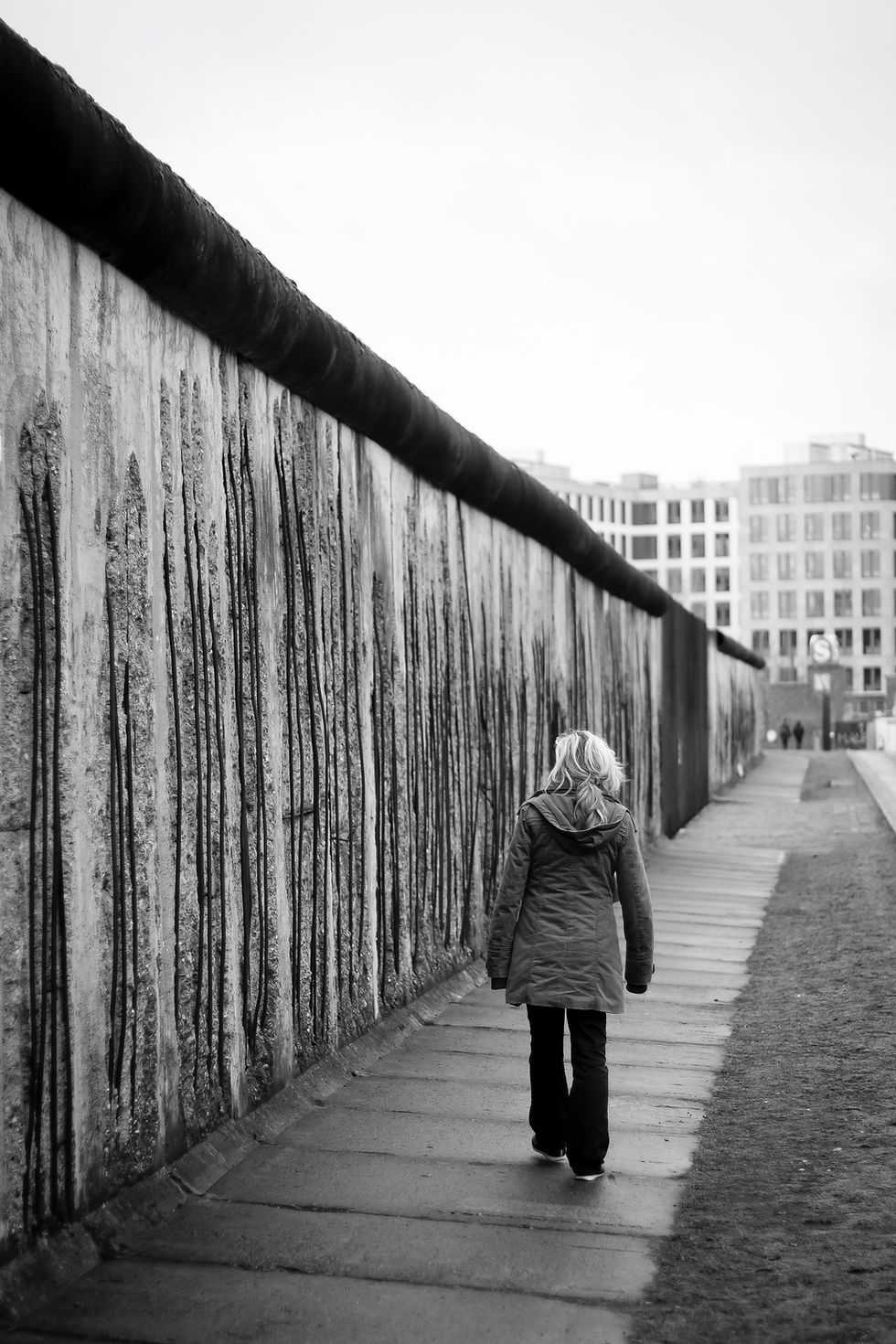
The Berlin Wall was more than concrete and barbed wire. It was the physical symbol of the Cold War, separating families, friends, and entire communities for nearly three decades.
What makes these stories so remarkable is not only their creativity but the extraordinary courage behind them. Every escape attempt carried enormous risks, including imprisonment, injury, or death.
From tunnels and bulldozers to balloons, cows, zip lines, and ultralight aircraft, these escapees constantly proved that human ingenuity could challenge even the most heavily fortified border in the world.
If you'd like to discover the real locations where these dramatic events unfolded, join me on a Cold War tour in Berlin. We'll visit original Berlin Wall sites, former death strip locations, escape tunnels, border crossings, and hidden places where ordinary people attempted extraordinary journeys to freedom.


Comments