The 30 Best Places to Visit in Germany: The Ultimate Travel Guide
Germany is far more than castles, beer, and Oktoberfest. It is a country where medieval towns, fairy-tale palaces, dramatic mountains, Roman ruins, UNESCO World Heritage Sites, world-class museums, and vibrant modern cities exist side by side. Whether you're visiting for a weekend or planning a three-week road trip, Germany offers some of Europe's most diverse and fascinating destinations.
Here's your ultimate guide to the 30 best places to visit in Germany, including what makes each destination special, what you shouldn't miss, and why these places have shaped German and European history.

1. Berlin – Germany's Capital of History and Creativity
Few cities anywhere in the world combine history and innovation like Berlin. Germany's capital has reinvented itself repeatedly: From the capital of Prussia to the German Empire, through the Nazi dictatorship, Cold War division, and finally reunification.
Today Berlin is one of Europe's most exciting cities, famous for its museums, architecture, nightlife, street art and green spaces.
Highlights
Brandenburg Gate
Reichstag Building
Museum Island (UNESCO)
Berlin Wall Memorial
East Side Gallery
Checkpoint Charlie
Topography of Terror
Charlottenburg Palace
Tiergarten
Holocaust Memorial
Berlin's museum scene is among the world's best, while neighborhoods like Kreuzberg, Prenzlauer Berg and Mitte are packed with cafés, galleries and restaurants.
The city also tells one of Europe's most important historical stories, from Prussian kings and emperors to Hitler, the Holocaust, the Cold War and the fall of the Berlin Wall.

2. Potsdam – Palaces and Prussian Splendour
Former residence of the Prussian kings and German emperors, the city is famous for magnificent palaces and landscaped parks.
Must See
Sanssouci Palace
New Palace
Cecilienhof Palace
Dutch Quarter
Alexandrowka Russian Colony
Glienicke Bridge
Babelsberg Palace
The UNESCO-listed palaces and parks stretch across much of the city. Cecilienhof hosted the Potsdam Conference in 1945, where Churchill, Truman and Stalin decided Europe's future after World War II.

3. Visit a Concentration Camp Memorial
One of the most important experiences in Germany is visiting a former Nazi concentration camp. These memorials preserve the memory of the Holocaust and Nazi crimes.
Sachsenhausen (near Berlin)
Originally built in 1936 as the model concentration camp, over 200,000 prisoners passed through Sachsenhausen. It later became a Soviet Special Camp after 1945.
Dachau (near Munich)
Germany's first regular concentration camp opened in 1933 and became the blueprint for many others.
Ravensbrück (north of Berlin)
The largest concentration camp built specifically for women.
These sites are educational rather than tourist attractions and provide powerful insight into one of history's darkest chapters.

Germany's second-largest city grew wealthy through international trade.
Today Hamburg combines historic warehouses with modern architecture and one of Europe's largest ports.
Highlights
Speicherstadt (UNESCO)
Elbphilharmonie
Port of Hamburg
Miniatur Wunderland
St. Michael's Church
Landungsbrücken
Alster Lakes
The city offers excellent seafood, harbour cruises and lively nightlife around St. Pauli.

5. Lübeck – Queen of the Hanseatic League
Lübeck was once Europe's most powerful trading city.
Its beautifully preserved medieval old town is surrounded by water and packed with Gothic brick churches.
Highlights
Holstentor Gate
St Mary's Church
Medieval Old Town (UNESCO)
Historic merchants' houses
Marzipan cafés
Lübeck's history as the capital of the Hanseatic League shaped northern Europe for centuries.
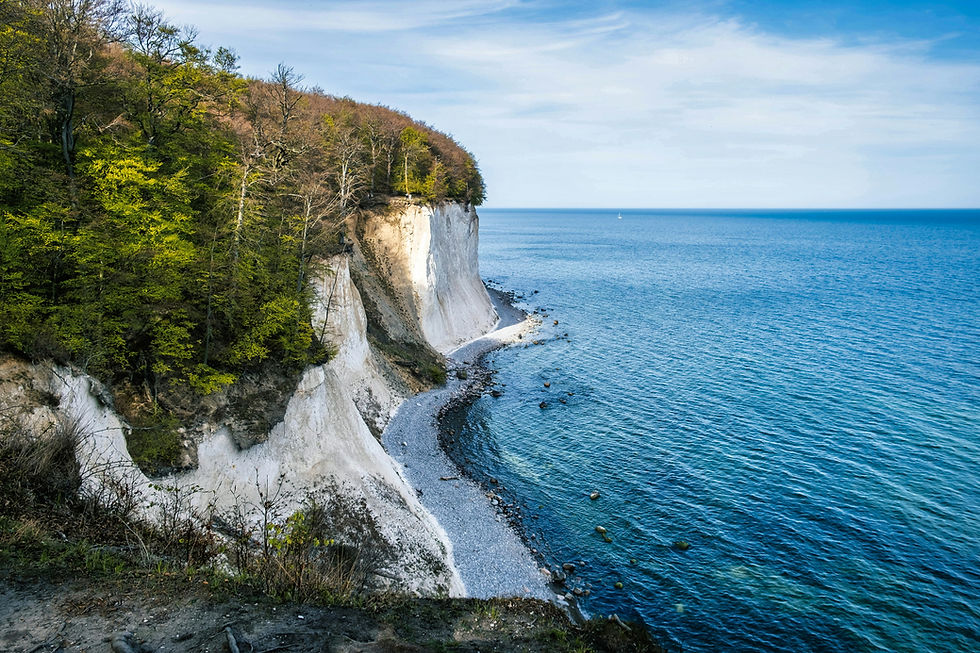
6. Germany's Baltic Coast and Rügen Island
Germany's Baltic coast offers sandy beaches, seaside resorts and dramatic chalk cliffs.
The jewel is Rügen, Germany's largest island.
Highlights
Jasmund National Park
Königsstuhl Chalk Cliffs
Binz Resort
Sellin Pier
Cape Arkona
Historic steam railway
The white cliffs inspired painter Caspar David Friedrich and remain among Germany's most iconic landscapes.

7. The North Sea Coast, Wadden Sea and Sylt
Germany's North Sea coast is unlike anywhere else.
The UNESCO-listed Wadden Sea is the world's largest tidal mudflat system.
Visitors can actually walk across the seabed during low tide with guided tours.
Highlights
Sylt Island
Halligen islands
Mudflat hiking
Seal watching
Lighthouses
Endless beaches
Sylt is Germany's most famous luxury island, while the Wadden Sea is internationally important for migrating birds.

8. Harz Mountains, Quedlinburg, Wernigerode and Goslar
The Harz region combines mountains, forests, medieval towns and folklore.
Quedlinburg
One of Europe's best-preserved medieval towns with over 2,000 half-timbered houses.
Wernigerode
Often called Germany's fairy-tale town thanks to its colourful town hall and hilltop castle.
Goslar
A UNESCO World Heritage city that became wealthy through silver mining.
The Harz is also famous for witches' legends associated with the Brocken mountain.

9. Rhine Valley Castles and Burg Eltz
Few landscapes define Germany like the Middle Rhine Valley.
Steep vineyards rise above the river, crowned by dozens of castles.
Highlights
Lorelei Rock
Marksburg Castle
Rheinstein Castle
Pfalzgrafenstein Castle
River cruises
Nearby stands Burg Eltz, arguably Germany's most beautiful medieval castle.
Unlike many castles, it has never been destroyed and has remained in the same family for over 850 years.

10. Dresden and Moritzburg Castle
Known as the "Florence on the Elbe," Dresden boasts magnificent Baroque architecture.
Although largely destroyed during World War II, many buildings have been painstakingly reconstructed.
Highlights
Frauenkirche
Zwinger Palace
Semper Opera
Royal Palace
Brühl's Terrace
Nearby Moritzburg Castle appears to float on a lake and became famous through the film Three Wishes for Cinderella.

11. Saxon Switzerland National Park
Despite its name, Saxon Switzerland lies in eastern Germany.
It is famous for dramatic sandstone cliffs, deep valleys and spectacular hiking.
Highlights
Bastei Bridge
Königstein Fortress
Schrammsteine
Elbe River scenery
Rock climbers have visited the area for over 150 years.

12. Nuremberg
Nuremberg perfectly combines medieval beauty with modern history.
Highlights
Imperial Castle
Medieval old town
Nazi Rally Grounds
Documentation Center
Christmas Market
The city hosted the famous Nuremberg Trials after World War II.

13. Rothenburg ob der Tauber
Perhaps Germany's most photographed town.
Its intact medieval walls, cobbled streets and colourful houses create a fairy-tale atmosphere.
Highlights include:
Town walls
Market Square
Plönlein
Medieval Crime Museum
Christmas Museum

14. The Romantic Road
Germany's most famous scenic route stretches around 460 km from Würzburg to Füssen.
It links vineyards, castles and medieval towns including:
Rothenburg
Dinkelsbühl
Nördlingen
Augsburg
Füssen
It is ideal for a road trip.

15. Munich
Bavaria's capital blends royal history with beer gardens and Alpine culture.
Highlights
Marienplatz
Nymphenburg Palace
English Garden
Deutsches Museum
Viktualienmarkt
Oktoberfest
Munich also serves as the gateway to southern Germany.

16. Neuschwanstein Castle
The world's most famous fairy-tale castle inspired Disney's Sleeping Beauty Castle.
Built by King Ludwig II during the 19th century, Neuschwanstein combines medieval romanticism with spectacular Alpine scenery. It attracts over one million visitors every year.

17. The Bavarian Alps: Garmisch, Zugspitze, Berchtesgaden and Eagle's Nest
Southern Bavaria offers Germany's most spectacular mountain scenery.
Highlights
Zugspitze (Germany's highest mountain)
Garmisch-Partenkirchen
Eibsee
Berchtesgaden National Park
Königssee
Eagle's Nest (Kehlsteinhaus)
The Eagle's Nest was built as a diplomatic retreat for Adolf Hitler, while nearby Berchtesgaden later became a symbol of the Nazi leadership.

18. Black Forest and Freiburg
The Black Forest is famous for dense forests, cuckoo clocks and traditional villages.
Freiburg
Germany's sunniest city is known for:
Medieval old town
Freiburg Cathedral
Small water channels (Bächle)
Excellent wine
Gateway to hiking
The Black Forest inspired many Grimm fairy tales.

19. Tübingen
One of Germany's prettiest university towns.
Colourful houses line the Neckar River while students fill cafés and narrow lanes.
Highlights include:
Hölderlin Tower
Market Square
Castle
Punt boat rides

20. Hohenzollern Castle
Standing dramatically atop a mountain, Hohenzollern Castle is one of Germany's most impressive castles.
It was the ancestral home of the Hohenzollern dynasty, who later ruled Prussia and the German Empire.
The panoramic views alone make it worth visiting.

21. Heidelberg
Germany's romantic city is famous for its ruined castle and Germany's oldest university.
Highlights
Heidelberg Castle
Old Bridge
Philosopher's Walk
Historic University
Old Town
The city escaped major wartime destruction, preserving its historic charm.
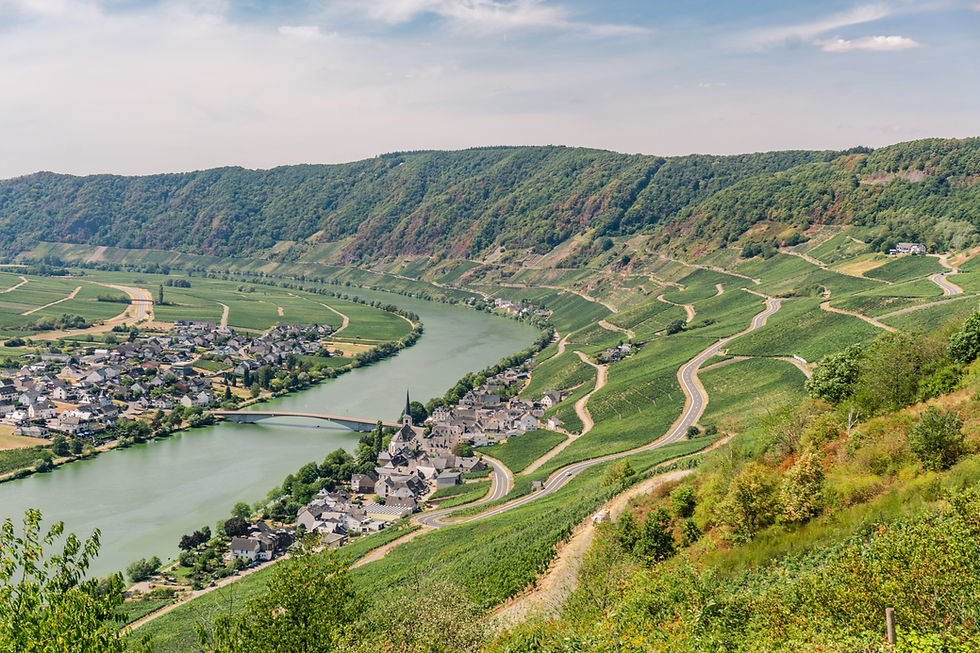
22. Mosel Valley and Trier
The Mosel Valley is renowned for steep vineyards and picturesque villages.
It produces some of Germany's finest Riesling wines.
Trier
Germany's oldest city was founded by the Romans over 2,000 years ago.
Highlights include:
Porta Nigra
Roman Baths
Roman Amphitheatre
Imperial Basilica
Cathedral
Many Roman monuments are UNESCO World Heritage Sites.

23. Bonn
Germany's former capital remains elegant and relaxed.
Highlights
Beethoven House
Rhine promenade
Museum Mile
Poppelsdorf Palace
It served as the capital of West Germany from 1949 until reunification.

24. Cologne
Cologne revolves around one of Europe's greatest cathedrals.
Highlights
Cologne Cathedral (UNESCO)
Old Town
Rhine River
Chocolate Museum
Roman-Germanic history
The Gothic cathedral took over 630 years to complete.

25. Frankfurt and Mainz
Frankfurt is Germany's financial capital, famous for its skyline.
Frankfurt
Römer Square
Main Tower
Museumsufer
Palm Garden
Nearby Mainz is much older
It was founded by the Romans and became famous as the hometown of Johannes Gutenberg, inventor of movable-type printing in Europe.
Mainz Cathedral and the Gutenberg Museum are highlights.

26. Aachen
Aachen was the favourite residence of Charlemagne and the coronation city of many German kings.
Highlights
Aachen Cathedral (UNESCO)
Charlemagne's Throne
Historic old town
Thermal springs
Its cathedral is among Germany's oldest UNESCO sites.

27. Leipzig
Leipzig has become one of Germany's most dynamic cultural cities.
Highlights
St. Thomas Church (Bach)
Monument to the Battle of the Nations
Old Town
Gewandhaus Orchestra
Cotton Mill art district
The peaceful demonstrations here in 1989 played a major role in bringing down East Germany.

28. Erfurt
The capital of Thuringia boasts one of Germany's best-preserved medieval centres.
Highlights
Krämerbrücke
Cathedral
Severi Church
Old Synagogue
Medieval streets
Martin Luther studied in Erfurt before becoming a monk.

29. Weimar
Weimar is Germany's cultural capital.
It became famous through Goethe, Schiller and the Weimar Classic movement.
Highlights
Goethe House
Schiller House
Duchess Anna Amalia Library
Bauhaus Museum
The Weimar Republic also takes its name from this city.
Nearby lies the former Buchenwald concentration camp memorial.

30. Lutherstadt Wittenberg
No place is more closely connected to the Protestant Reformation.
In 1517 Martin Luther famously published his 95 Theses here, challenging the Catholic Church and changing European history forever.
Highlights
Castle Church
Luther House
Melanchthon House
Historic Old Town
The town is a UNESCO World Heritage Site and remains one of Christianity's most significant pilgrimage destinations.

Final Thoughts
Germany rewards travelers with an extraordinary variety of experiences. In a single trip, you can walk through Roman cities over 2,000 years old, explore fairy-tale castles, hike alpine peaks, cruise past medieval fortresses, relax on windswept beaches, visit world-class museums, and reflect at sites that preserve the memory of the Holocaust.
For first-time visitors, a classic route might combine Berlin, Potsdam, Dresden, Saxon Switzerland, Nuremberg, Rothenburg ob der Tauber, Munich, Neuschwanstein Castle, the Bavarian Alps, Heidelberg, the Rhine Valley, Cologne, and Hamburg. Those with more time should also explore the Harz Mountains, the Black Forest, the Baltic and North Sea coasts, and the culturally rich cities of Weimar, Leipzig, Erfurt, and Trier.
No matter your interests - history, architecture, nature, food, wine, or outdoor adventure - Germany offers some of Europe's most rewarding travel experiences, with excellent public transportation making it easy to connect these remarkable destinations into an unforgettable journey.


Comments