Georgian Food in Berlin: Why the German Capital Fell in Love with Georgian Cuisine
Updated: Sep 22
If you've spent time exploring Berlin's restaurant scene over the last few years, you've probably noticed something unexpected: Georgian restaurants are everywhere.
From cozy family-run taverns in Prenzlauer Berg to stylish wine bars in Charlottenburg and bustling restaurants in Friedrichshain, Berlin has quietly become one of Europe's best cities for Georgian food.
But why has Georgian cuisine become such a phenomenon in Berlin? And what makes it so different from other Eastern European or Middle Eastern food?
Here's everything you need to know.
Also be sure to check out my guide to the best restaurants in Berlin!

Why Is Georgian Food So Popular in Berlin?
Berlin has always embraced cuisines that are authentic, affordable, and perfect for sharing.
That's exactly what Georgian food offers.
The country's cuisine combines influences from Europe, the Middle East, Persia, Turkey and Russia, creating dishes that feel both familiar and completely unique. Think freshly baked bread filled with bubbling cheese, handmade dumplings bursting with broth, charcoal-grilled meat, rich walnut sauces and some of the oldest wines on Earth.
Unlike many food trends, Georgian restaurants have grown through genuine demand rather than social media hype. Berlin's adventurous food culture has embraced a cuisine that many visitors had never even heard of a decade ago.
A Growing Georgian Community in Berlin
One important reason behind this boom is Berlin's growing Georgian community.
Germany is home to more than 40,000 Georgian citizens, with Berlin hosting one of the country's largest Georgian populations. Many young Georgians have moved to Berlin in recent years, attracted by its creative atmosphere, liberal culture and thriving arts and music scene.
As communities grow, authentic restaurants naturally follow.
Rather than adapting recipes to German tastes, many Georgian restaurateurs have introduced traditional family recipes, regional wines and genuine hospitality to Berlin.
The result is a restaurant scene that feels remarkably authentic.
Berlin's International Food Culture
Berlin has long welcomed cuisines before they become mainstream.
The city popularized Vietnamese food after German reunification, embraced Israeli and Levantine restaurants, developed one of Europe's strongest Korean food scenes and continues to attract chefs from around the world.
Georgian cuisine fits perfectly into that landscape.
It's hearty enough for Germany's winters, vegetarian-friendly, ideal for sharing among friends and offers something genuinely different from the city's many Italian, Turkish or Asian restaurants.
The Rise of Georgian Wine
One of the biggest reasons for Georgian cuisine's popularity is something many visitors don't initially expect: the wine.
Georgia is widely considered the birthplace of wine, with an uninterrupted winemaking tradition stretching back around 8,000 years.
Many wines are still produced using traditional clay vessels called qvevri, buried underground during fermentation. This ancient method creates distinctive orange wines that have become hugely popular in Berlin's natural wine bars.
Many Georgian restaurants therefore double as wine destinations, introducing guests to unique grape varieties that are rarely found elsewhere.
Georgian Hospitality: The Supra
Food in Georgia is about far more than eating.
Traditional meals revolve around the Supra, an elaborate feast where large numbers of dishes are shared across the table while friends and family spend hours eating, drinking and making toasts.
That style of dining feels perfectly suited to Berlin.
Groups gather around large tables, order numerous dishes to share and often spend an entire evening together—something that has become increasingly popular across the city's restaurant scene.
Khachapuri
No Georgian meal is complete without khachapuri.
This iconic cheese-filled bread comes in several regional varieties, but the most famous is Adjarian Khachapuri—a boat-shaped bread filled with molten cheese, butter and a raw egg that's stirred together at the table.
It's rich, comforting and instantly memorable.
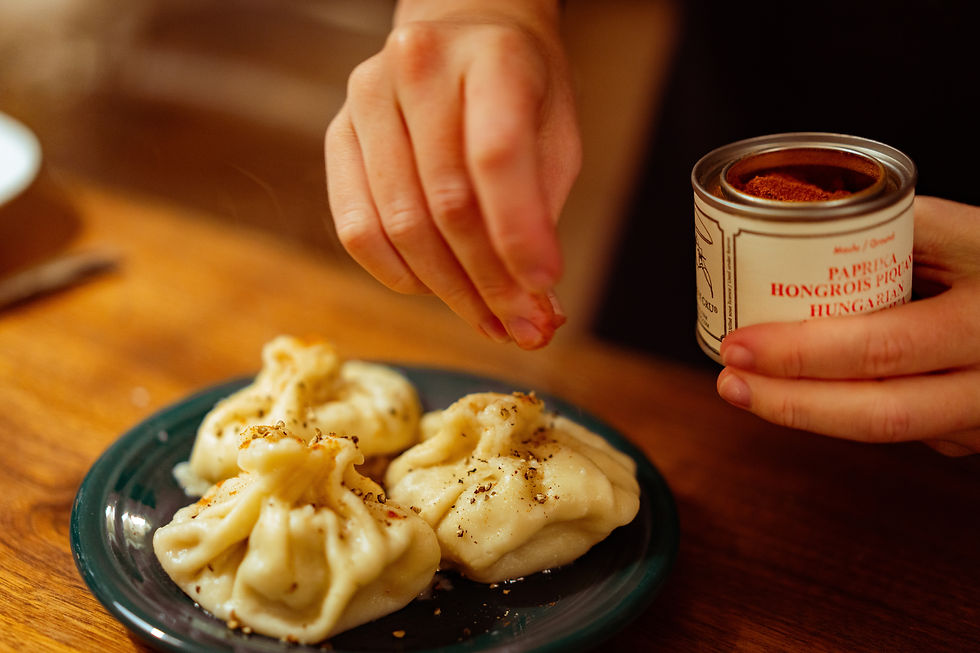
Khinkali
Georgia's answer to soup dumplings.
These oversized dumplings are filled with juicy meat, herbs and hot broth. The traditional way to eat them is by hand, carefully sipping the broth before finishing the dumpling itself.
Don't eat the twisted top knot—that's simply used as a handle.
Badrijani Nigvzit
Thin slices of fried aubergine wrapped around a creamy walnut and garlic filling.
It's one of Georgia's most famous vegetarian dishes and appears on almost every menu.
Kharcho
A deeply flavoured beef soup with rice, herbs and walnuts that's perfect during Berlin's colder months.
Mtsvadi
Traditional charcoal-grilled meat skewers, often served with fresh herbs, onions and Georgian sauces.
Lobio
A comforting bean stew flavoured with coriander, garlic and spices, usually served with fresh bread.
Best Georgian Restaurants in Berlin
Berlin now offers dozens of excellent Georgian restaurants across the city. Some of the most highly regarded include:
Salhino (Charlottenburg) – elegant Georgian cooking with excellent wines.
Der Blaue Fuchs (Prenzlauer Berg) – famous for Georgian wine and traditional dishes.
Kin Za (Mitte) – lively atmosphere and excellent khinkali.
Golden Fleece (Friedrichshain) – modern Georgian comfort food.
Tsomi (Prenzlauer Berg) – contemporary Georgian cuisine in stylish surroundings.
Genazvale (Wilmersdorf) – one of Berlin's longest-established Georgian restaurants.
Khinkali House (Friedrichshain) – specialising in handmade dumplings.
Ambavi (Friedrichshain) – popular for brunch and traditional Georgian feasts.
Schwiliko (Kreuzberg) – family-run restaurant known for its warm hospitality.
Tamada (Potsdam) - so popular that it operates two restaurants in Potsdam these days.
Many of these restaurants also offer extensive selections of Georgian wines, making them ideal for a relaxed evening out.

Why Berlin Is One of Europe's Best Cities for Georgian Food
Outside Georgia itself, few European cities offer such a concentration of authentic Georgian restaurants.
Berlin combines several unique advantages:
A large and growing Georgian community.
A population eager to discover new cuisines.
Strong interest in natural wine.
A restaurant culture built around sharing food.
Chefs committed to authentic cooking rather than adapting recipes for tourists.
Together, these have transformed Georgian cuisine from a niche curiosity into one of Berlin's most exciting culinary success stories.
Should You Try Georgian Food?
Absolutely.
Whether you're visiting Berlin for a few days or have lived here for years, Georgian food offers one of the city's most rewarding dining experiences.
It's comforting yet sophisticated, traditional yet unfamiliar, and combines outstanding food with one of the world's oldest wine cultures.
Order a khachapuri, share a plate of khinkali, pour a glass of Georgian orange wine—and you'll quickly understand why Berlin has fallen in love with Georgian cuisine.


Comments