Complete Guide to the Berlin Marathon 2026
Updated: Jul 25
The BMW Berlin Marathon isn’t just another race – it’s one of the world’s great running events, part of the Abbott World Marathon Majors alongside Boston, New York, London, Chicago, and Tokyo. Every September, more than 55,000 runners from over 120 countries take to Berlin’s streets, or round 58,000 participants including wheelchair athletes and handcyclists. Whether you’re running or cheering, here’s everything you need to know.
Join me on a private guided tour of Berlin, and check out my lists of recommended hotels, restaurants and this guide to master Berlin's public transportation!
A Short History
The first Berlin Marathon in 1974 was a modest affair: 286 runners started at Mommsenstadion in Westend and ran through the Grunewald forest to Wannsee. It was more of a local race back then. At the second marathon, a husband and wife took the men’s and women’s medals – true hashtag couple goals.
In 1981, Berlin organizers wanted the marathon to go through the city center, just like in New York and London. The police president was shocked: “Dort drüben sitzt ein Verrückter. Der will durch die Stadt rennen.” (Over there sits a madman. He wants to run through the city.) At the time, police insisted streets were only for cars – but thanks to support from the Western Allies, the marathon started for the first time in front of the Reichstag. Over 3,000 runners ran through West Berlin, past the Kaiser Wilhelm Memorial Church and even along the Berlin Wall.
The defining year was 1990, just after reunification. For the first time, runners dashed through the Brandenburg Gate, symbolizing Berlin’s new era. From then on, registration became mandatory in advance.
In 1997, inline skaters joined the fun – today Berlin hosts the world’s largest inline marathon. By 2006, Berlin was a founding member of the Abbott World Marathon Majors, joining Tokyo, London, Boston, Chicago, and New York.
And thanks to its flat course and mild September weather, Berlin is where world records fall – more often than anywhere else.

Date & Registration
The Berlin Marathon usually takes place on the last Sunday in September.
Entry is by lottery, usually opening in October the year before.
Charity entries and tour operator packages are also available.
Marathon weekend begins on Saturday with the Inline Skating Marathon, Bambini Run and mini-marathon, making the whole weekend feel like a city-wide festival.
Weather & What to Pack
Late September in Berlin is mild but unpredictable:
Average highs: 19°C / 66°F
Average lows: 11°C / 52°F
Pack layers for before and after the race.
The Course
The race starts and finishes on Straße des 17. Juni in Tiergarten, with the Brandenburg Gate at its heart. The loop covers ten districts, past landmarks like:
Reichstag
Victory Column
Kaiser Wilhelm Memorial Church
Potsdamer Platz
Berlin Cathedral
Gendarmenmarkt
Berlin TV Tower
And of course, that unforgettable final sprint through the Brandenburg Gate.
Public transport makes it easy to catch runners multiple times:
Option 1: Start at Rosa-Luxemburg-Platz (10 km), hop on the U2 to Bülowstraße (half marathon), then catch them again near 36–37 km.
Option 2: Oranienburger Tor (8 km), then U6 to Mehringdamm (19–20 km), then north to 39–40 km.
📌 The finish area is crowded – get there early if you want a spot in the grandstands. Meeting points after the race are at Paul-Löbe-Haus (Bundestag station), as the finish area itself is reserved for runners.
Hydration, Toilets & Pacers
Aid stations every 2.5–3 km with water, tea, isotonic drinks, and sometimes fruit or gels.
Portable toilets are at the start and along the route.
Pacers (balloon carriers) run at common finish times to help with pacing.
Bag Drop & Logistics
Bag drop is available at the start/finish area with your race kit.
Many runners prefer using the provided disposable poncho instead.
The finish area is runners-only – family and friends should arrange to meet you outside.
The Marathon Expo
The Marathon Expo is held at the historic Tempelhof Airport, where you'll collect your bib number and race pack. It's also one of Europe's biggest running expos, with gear, nutrition and plenty of race atmosphere.
What to Eat (Pasta in Berlin!)
Carb-loading is part of the tradition. Great pasta restaurants include:
La Galleria Italiana (Mitte) – small Italian that only serves pasta.
Pasta and Passione (Prenzlauer Berg) - Fresh pasta and bigger than the place in Mitte.
Spaghetti Western (Kreuzberg) – casual and fun.
Transport & Free Travel
Marathon participants get free Berlin public transport from Thursday to Sunday with bib and ticket. The ticket is included with your race registration and covers ABC zones (which includes ALL public transport (busses, trams, U-Bahn, S-Bahn, regional trains) in and around Berlin (including Potsdam, Sachsenhausen and the airport).
Airport transfers: FEX train, S-Bahn, regional trains, taxi/Uber, or Welcome Pickups for private service from Berlin Brandenburg Airport (BER)
Post-Race
After the finish, runners exit through Tiergarten’s north side.
Official meeting points: Paul-Löbe-Haus near Bundestag.
Recovery stations offer water, isotonic drinks, fruit, and often alcohol-free beer.
Beyond the Marathon
Berlin is more than a racecourse:
Explore the city with a private tour before or after the race.
On race day, when Berlin is blocked off, supporters can enjoy a day trip to Potsdam with palaces and gardens.
Final Tips
Arrive by Friday to collect your bib and explore.
Hotels become significantly more expensive during marathon weekend, so book accommodation as early as possible.
Use your free transport ticket for sightseeing.
Enjoy the atmosphere – Berlin Marathon weekend is unlike anything else.
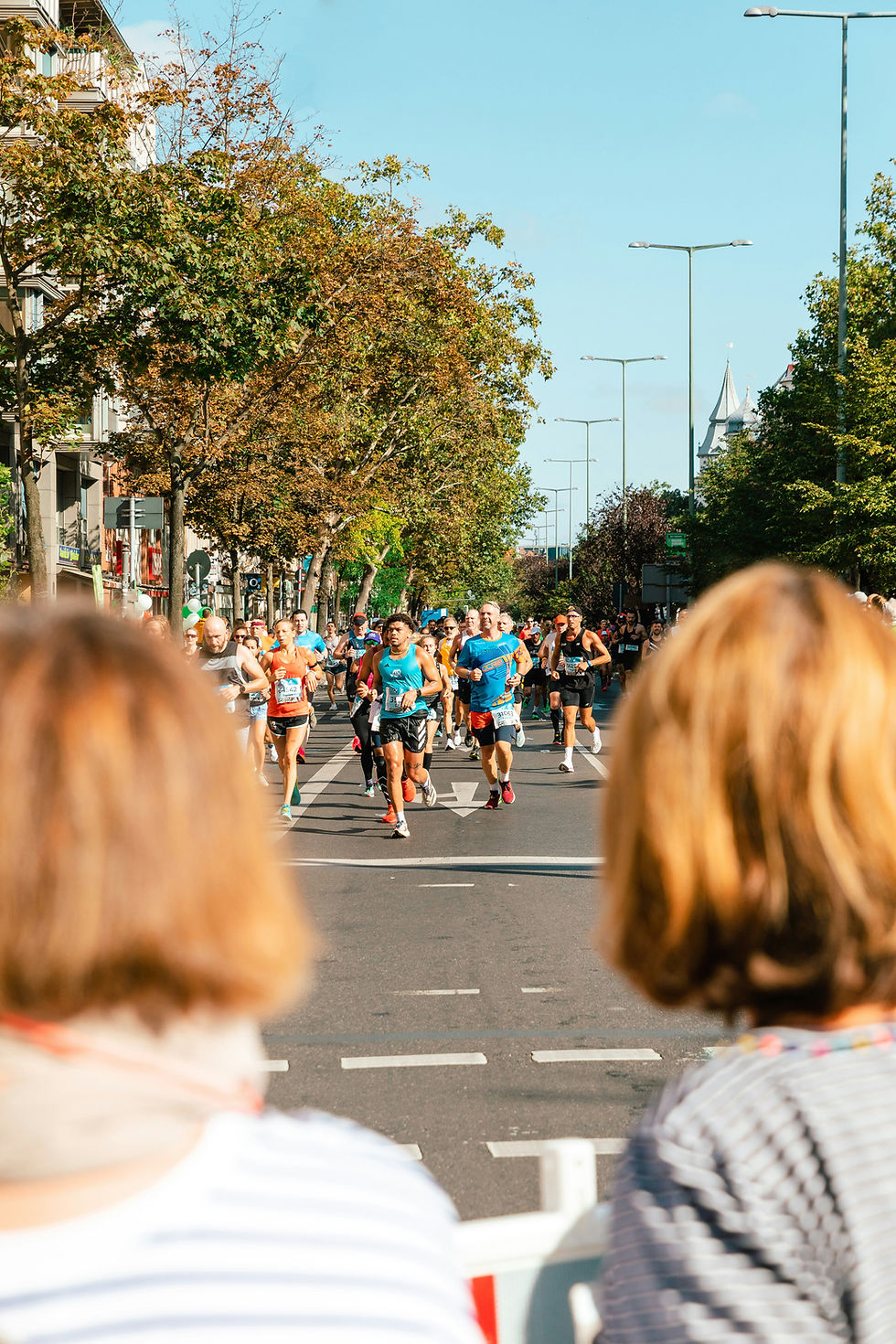
🏁 Whether you’re running for a personal best, cheering a loved one, or simply soaking in the excitement, the Berlin Marathon is an unforgettable experience.
Make the Most of Your Marathon Trip
Most runners spend three or four days in Berlin. The best time to explore the city is before race day, while your legs are still fresh. A private walking tour lets you see the Brandenburg Gate, Reichstag, Berlin Wall and Museum Island without wasting time figuring out public transport or guidebooks. After the marathon, many visitors take an easy day trip to Potsdam to enjoy its palaces and gardens.
FAQs
Is the Berlin Marathon flat?
Yes. With only around 80 metres of elevation gain, the Berlin Marathon is widely regarded as the fastest marathon course in the world, which is why so many world records have been set here.
How difficult is it to get into the Berlin Marathon?
Entry is by lottery, and demand greatly exceeds available places. If you're not successful, charity entries and authorised tour operators offer alternative ways to secure a race bib.
Where are the best places to watch the Berlin Marathon?
The Berlin Marathon offers plenty of fantastic viewing spots, making it easy for friends and family to cheer on runners more than once during the race. Here are some of the best locations:
Straße des 17. Juni (Start): Experience the excitement as thousands of runners set off on their marathon journey.
Kurfürstendamm (around km 14): One of Berlin's most famous shopping streets, packed with enthusiastic crowds and a lively atmosphere.
Potsdamer Platz (around km 25): A central location that's easy to reach by public transport, with plenty of cafés and restaurants nearby.
Berlin Cathedral (Berliner Dom, around km 38): A great place to support runners during the final, most challenging kilometres.
Brandenburg Gate (Finish): The iconic finish line is one of the most unforgettable moments of the race, although it can get very crowded.
If you want to see your runner more than once, Berlin's excellent public transport system makes it possible to move between several viewing points throughout the day. Just be sure to allow extra travel time, as some stations and streets will be especially busy on marathon day.


Comments